AI Predicts Future Pancreatic Cancer

by | 8 June, 2023 | Pancreatic cancer, Research

An artificial intelligence tool has successfully identified people at the highest risk for pancreatic cancer up to three years before diagnosis using solely the patients’ medical records.

This according to new research led by investigators at Harvard Medical School and the University of Copenhagen, in collaboration with VA Boston Healthcare System, Dana-Farber Cancer Institute, and the Harvard T.H. Chan School of Public Health.

The findings, published May 8 in Nature Medicine, suggest that AI-based population screening could be valuable in finding those at elevated risk for the disease and could expedite the diagnosis of a condition found all too often at advanced stages when treatment is less effective and outcomes are dismal, the researchers said. 

Diagnos

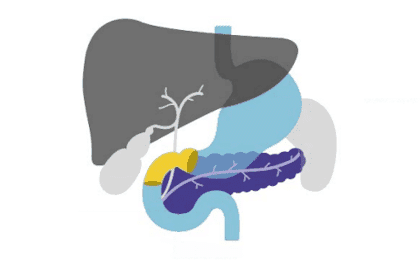
Pancreatic cancer is one of the deadliest cancers in the world, and its toll projected to increase.

Currently, there are no population-based tools to screen broadly for pancreatic cancer. Those with a family history and certain genetic mutations that predispose them to pancreatic cancer are screened in a targeted fashion. But such targeted screenings can miss other cases that fall outside of those categories, the researchers said.

Blåljuscancer (R)

Välkommen att kontakta PALEMAs redaktion om du har förslag på artiklar eller synpunkter på artiklar vi skrivit.

Observera att detta inte är ett debattforum, vill du debattera med andra hänvisar vi till våra slutna Facebookgrupper.

Dela – Mejla – Skriv ut:

Share- Email – Print:

Vi tackar våra sponsorer för deras oumbärliga stöd!

Weekend Webbexperterna
Wavebox
Weekend Webbexperterna
Mediemerah

Fler nyheter:

More news:

Foxglove flower photo: Jessica Cortez
Pancreatic cancer, Research

18th century medicine being tested against deadly cancer

An 18th century remedy could be a new weapon in the fight against one of the most deadly cancers. Researchers in Skövde, Sweden, together with Skaraborg Hospital, are now starting a clinical trial to investigate whether the heart medicine digitoxin, originally extracted from the foxglove flower, can be used against pancreatic cancer.

Cells
Pancreatic cancer, Research

Tumor cells exploit damaged pancreatic tissue

Pancreatic cancer is one of the most aggressive cancers. A new study from Karolinska Institutet in collaboration with the Department of Pathology at Karolinska University Hospital shows that tumor cells grow not only in the connective tissue-rich environment typical of the disease, but also in damaged parts of the pancreas where normal tissue has been altered. The findings may provide new insights into tumor development and treatment.

Anna Forslund and Antonio Akiki
Bile duct cancer, Emergency cancer, Liver cancer, Press release, Research

PALEMA research grants awarded to two cancer researchers in liver and biliary tract cancer

The Swedish cancer association PALEMA is awarding its research grants for the first time to two promising young cancer researchers in the field of liver and biliary tract cancer. This year’s recipients are **Anna Forslund**, specialist surgeon at Sahlgrenska University Hospital, and **Antonio Akiki**, junior doctor at the Upper Abdominal Disease Unit, Karolinska University Hospital.

Foxglove flower photo: Jessica Cortez
Pancreatic cancer, Research

18th century medicine being tested against deadly cancer

An 18th century remedy could be a new weapon in the fight against one of the most deadly cancers. Researchers in Skövde, Sweden, together with Skaraborg Hospital, are now starting a clinical trial to investigate whether the heart medicine digitoxin, originally extracted from the foxglove flower, can be used against pancreatic cancer.

Cells
Pancreatic cancer, Research

Tumor cells exploit damaged pancreatic tissue

Pancreatic cancer is one of the most aggressive cancers. A new study from Karolinska Institutet in collaboration with the Department of Pathology at Karolinska University Hospital shows that tumor cells grow not only in the connective tissue-rich environment typical of the disease, but also in damaged parts of the pancreas where normal tissue has been altered. The findings may provide new insights into tumor development and treatment.

Anna Forslund and Antonio Akiki
Bile duct cancer, Emergency cancer, Liver cancer, Press release, Research

PALEMA research grants awarded to two cancer researchers in liver and biliary tract cancer

The Swedish cancer association PALEMA is awarding its research grants for the first time to two promising young cancer researchers in the field of liver and biliary tract cancer. This year’s recipients are **Anna Forslund**, specialist surgeon at Sahlgrenska University Hospital, and **Antonio Akiki**, junior doctor at the Upper Abdominal Disease Unit, Karolinska University Hospital.

Pin It on Pinterest