Fact sheet for people with a duodenal stent

by | 12 January, 2024 | Pancreatic cancer

For those who have or will have a duodenal stent, read more about this – including how to manage your diet – in a fact sheet from Pancreatic Cancer UK. 

After you eat, food moves from your stomach into your duodenum, which is the first part of the small intestine.

If you have pancreatic cancer, the cancer can press on the duodenum and stop the food passing out of the stomach. That can make you feel full up, feel sick, vomit large amounts, lose weight and have tummy pain, bloating, and cramps.

A duodenal stent is a tube that is put into the duodenum to open up the blockage and let the food pass through. Once the stent is in, you should start to feel better quite quickly.
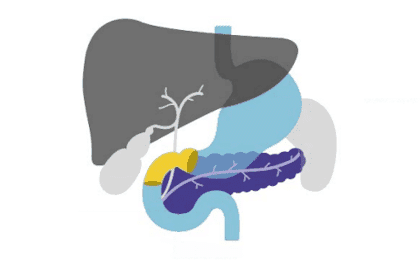
Sometimes there can be problems with stents, including blockages. So, if you have a duodenal stent, you will need to be careful about what you eat to stop it getting blocked.

Image from Pancreatic Cancer UK factsheet

Fact sheet duodenal stent

This factsheet is for people with pancreatic cancer who have or will have a stent to treat a blocked duodenum. Relatives/carers may also find it useful. It explains what stents are, when they are used, how they are inserted, possible problems and how to manage your diet with a stent. 

>>> Download it here

Blåljuscancer (R)

Välkommen att kontakta PALEMAs redaktion om du har förslag på artiklar eller synpunkter på artiklar vi skrivit.

Observera att detta inte är ett debattforum, vill du debattera med andra hänvisar vi till våra slutna Facebookgrupper.

Dela – Mejla – Skriv ut:

Share- Email – Print:

Vi tackar våra sponsorer för deras oumbärliga stöd!

Weekend Webbexperterna
Wavebox
Weekend Webbexperterna
Mediemerah

Fler nyheter:

More news:

Foxglove flower photo: Jessica Cortez
Pancreatic cancer, Research

18th century medicine being tested against deadly cancer

An 18th century remedy could be a new weapon in the fight against one of the most deadly cancers. Researchers in Skövde, Sweden, together with Skaraborg Hospital, are now starting a clinical trial to investigate whether the heart medicine digitoxin, originally extracted from the foxglove flower, can be used against pancreatic cancer.

Cells
Pancreatic cancer, Research

Tumor cells exploit damaged pancreatic tissue

Pancreatic cancer is one of the most aggressive cancers. A new study from Karolinska Institutet in collaboration with the Department of Pathology at Karolinska University Hospital shows that tumor cells grow not only in the connective tissue-rich environment typical of the disease, but also in damaged parts of the pancreas where normal tissue has been altered. The findings may provide new insights into tumor development and treatment.

Anna Forslund and Antonio Akiki
Bile duct cancer, Emergency cancer, Liver cancer, Press release, Research

PALEMA research grants awarded to two cancer researchers in liver and biliary tract cancer

The Swedish cancer association PALEMA is awarding its research grants for the first time to two promising young cancer researchers in the field of liver and biliary tract cancer. This year’s recipients are **Anna Forslund**, specialist surgeon at Sahlgrenska University Hospital, and **Antonio Akiki**, junior doctor at the Upper Abdominal Disease Unit, Karolinska University Hospital.

Foxglove flower photo: Jessica Cortez
Pancreatic cancer, Research

18th century medicine being tested against deadly cancer

An 18th century remedy could be a new weapon in the fight against one of the most deadly cancers. Researchers in Skövde, Sweden, together with Skaraborg Hospital, are now starting a clinical trial to investigate whether the heart medicine digitoxin, originally extracted from the foxglove flower, can be used against pancreatic cancer.

Cells
Pancreatic cancer, Research

Tumor cells exploit damaged pancreatic tissue

Pancreatic cancer is one of the most aggressive cancers. A new study from Karolinska Institutet in collaboration with the Department of Pathology at Karolinska University Hospital shows that tumor cells grow not only in the connective tissue-rich environment typical of the disease, but also in damaged parts of the pancreas where normal tissue has been altered. The findings may provide new insights into tumor development and treatment.

Anna Forslund and Antonio Akiki
Bile duct cancer, Emergency cancer, Liver cancer, Press release, Research

PALEMA research grants awarded to two cancer researchers in liver and biliary tract cancer

The Swedish cancer association PALEMA is awarding its research grants for the first time to two promising young cancer researchers in the field of liver and biliary tract cancer. This year’s recipients are **Anna Forslund**, specialist surgeon at Sahlgrenska University Hospital, and **Antonio Akiki**, junior doctor at the Upper Abdominal Disease Unit, Karolinska University Hospital.

Pin It on Pinterest